
Traveling Together Without Losing Your Mind: Couples Tips for a Stress-Free Vacation
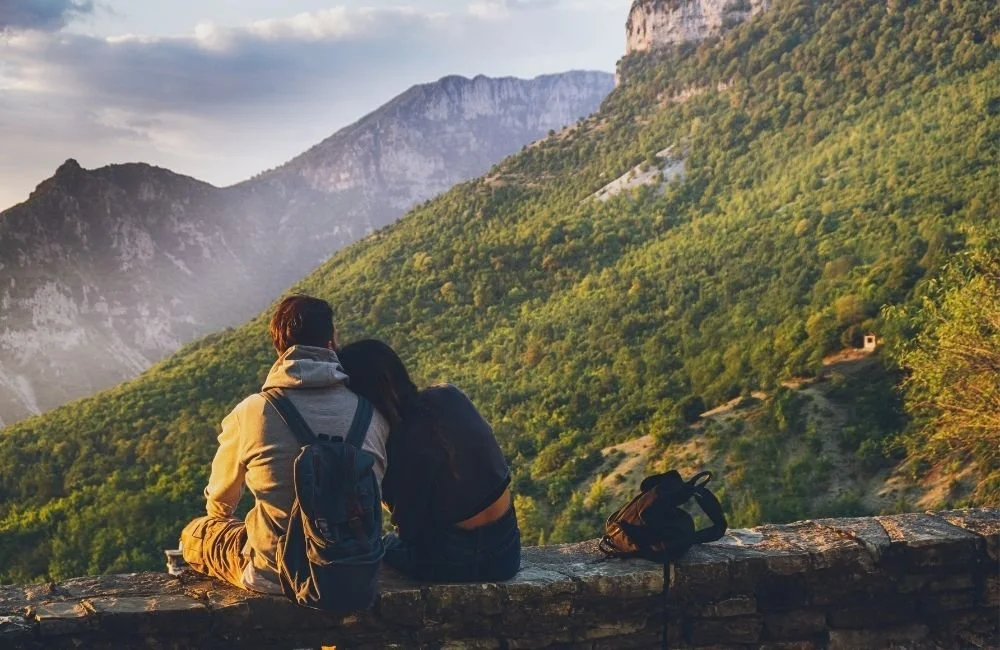
Traveling with a partner is one of the most revealing things a couple can do together. It strips away your routines, tests your communication, and puts your differences on full display. If you and your partner tend to bump heads on vacation, this post is for you: practical, research-informed couples travel tips to help you navigate stress, manage conflict, and actually enjoy the trip.
Check out a media interview that I did on Airport Divorce on CBC Radio.
You planned it for months. You were so excited. And now you're standing in the airport, forty-five minutes before boarding, and you're already annoyed at each other.
This is one of the great mysteries of couple life: why does vacation (the thing we most look forward to) so reliably become a source of conflict? The answer is actually pretty simple. And understanding it can change everything.
Why Couples Have Different Travel Styles
Most couples discover fairly quickly that they have different travel styles. One person wants to plan every meal in advance; the other wants to wander. One wants to see everything; the other wants to see nothing. One treats departure time as a suggestion; the other has been at the gate for ninety minutes.
These differences aren't character flaws. They reflect deeply held values: a need for control versus spontaneity, adventure versus safety, stimulation versus rest. The problem isn't that you're different. The problem is that neither of you usually slows down long enough to name those differences before the trip, so they surface as irritation instead of information.
Why Vacation Amplifies Relationship Stress
Travel removes the structure that normally buffers a relationship. Your routines are gone. You may be sleeping poorly, eating at odd times, navigating unfamiliar places, and managing the logistics of children, budgets, and weather, all while trying to relax. That's a lot. Any friction that exists in the relationship tends to get louder without the daily routine that usually cushions it.
Add to that the fact that many couples enter vacation with unspoken expectations (this will finally be the relaxing trip; we'll reconnect; it will feel like it used to), and you have a recipe for disappointment.
Practical Tips for Traveling Better Together
The good news: most vacation conflict is preventable with a little intentional conversation before you go. Here's what couples therapists (and road-tested couples) recommend:
Talk about your travel styles explicitly. Ask each other: What does a good day look like on this trip? What do you need in order to feel rested? What are you most excited about? What are you most anxious about? You may be surprised by what you learn.
Build in individual time. Even the most connected couples benefit from a few hours apart during a trip. A solo walk, a museum visit alone, reading while your partner swims. Small doses of independence make togetherness feel like a choice rather than an obligation.
Lower the bar on "perfect." The best travel memories often come from things going sideways: the restaurant that was closed, the wrong turn that led somewhere beautiful, the afternoon you just sat and talked. Release the itinerary enough to let the trip surprise you.
Repair quickly. On a trip, unresolved conflict has nowhere to hide. If something goes sideways between you, address it sooner rather than later. A simple "I think we got off on the wrong foot earlier. Can we reset?" goes a long way.
What Vacation Conflict Is Really Telling You
Vacation conflict rarely means you're incompatible. More often it means you're two real people with different needs, under a bit of pressure, without your usual routines to lean on. That's not a crisis. It's just a relationship, in a new location.
The couples who travel well together aren't the ones without conflict. They're the ones who've learned to navigate it with a little grace, a little humour, and a genuine interest in what the other person actually needs.
Pack that, and you're ready.
A question for the road: Before your next trip, ask your partner: "What's one thing I could do to make this trip feel easier for you?"